Showing posts with label research results. Show all posts

Thursday, August 20, 2009

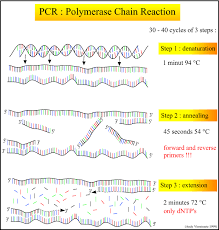
PCR based detection of virus


PCR-based detection and identification of viruses assumes a known, relatively stable genome. Unfortunately, high mutation rates may lead to extensive changes in viral nucleic acid sequences making dedicated PCR primer use problematic. Furthermore, in bioterrorism, viral consensus sequences can be genetically modified as a countermeasure to RT-PCR and DNA chip detection. Accordingly, there is a great need for the development of rapid and universal virus detection and identification technologies.
Relatively benign viruses can be converted into highly virulent viruses via the introduction of genes of interest. For example, Ectromelia virus, a natural pathogen of mice that causes mousepox, recently was recombined with interleukin-4 as part of an effort to develop a live virus immuno-contraceptive vaccine. Surprisingly, the recombined virus caused 60% mortality in 2 strains of mice, whereas the wild type virus caused no death [1]. A credible bioterrorism scenario might entail the release of such a recombined or chimeric virus tailored for maximum infectivity and pathogenicity but not readily detectable using our current "state-of-the-art" diagnostics (i.e., PCR and micro-array chips.) Accordingly, there is a need for methods that can identify unknown viral pathogens and which can reveal extensive genomic information. Such methods would not only prove useful for our defense against bioterrorism, but also would improve our capacities to identify and control outbreaks of naturally occurring pathogenic viruses.
RNA Arbitrarily Primed PCR [RAP-PCR] [6-8]). The amplicons range in size from ~50–600 bp and overlap. RAP-PCR was recently used successfully to identify a novel human pneumovirus only after the virus had been cultured [9]. These techniques yield an amplicon "fingerprint" and are generally used to compare two populations of nucleic acids
This example highlights the superiority of PCR over other currently available methods. DNA chips that allow the simultaneous measurement of literally thousands of genes through hybridization are now being developed as the next-generation rapid diagnostic test for all known human pathogens [4]. However, both of these technologies rely on a relatively stable genome, and several human pathogens display a high mutation rate

Results
We report herein that viral genomic DNA or RNA can be separated from host nucleic acids in plasma by filtration and nuclease digestion, and randomly amplified in a single PCR using a mixture of primers designed to be resistant to primer-dimer amplification (5'-VVVVVVVVAA-3', V = A, G or C; 38 or 6561 primers). We have termed this novel PCR method Random Multiplex (RT)-PCR since hundreds of overlapping PCR amplifications occur simultaneously. Using this method, we have successfullydetected and partially sequenced 3 separate viruses in human plasma without using virus-specific reagents (i.e., Adenovirus Type 17, Coxsackievirus A7, and Respiratory Syncytial Virus B). The method is sensitive to ~1000 genome equivalents/ml and may represent the fastest means of detection of unknown viruses.

Tuesday, August 11, 2009

CPU must be replaced with GPU


Martínez and graduate student Ivan S. Ufimtsev, announced they had rewritten algorithms to run on a computer's graphical processing unit (GPU) rather than the central processing unit (CPU) of a traditional desktop computer.

The revamped algorithms calculated the structures of test molecules up to 650 times faster than the molecular design program called GAMESS running on a computer's CPU (see top image).

A GPU is the core of a computer's video card and the technological driving force behind the ultra-fast graphics and realism of today's video games.

The researchers ran their algorithms on three different GPU systems each touting as many as 240 parallel processors and a novel "stream processing" architecture that allows the GPUs to perform as general-purpose processing units rather than being hard wired just to process graphics.

A GPU can process nearly a trillion operations per second and may be purchased for as little as $260. A CPU with four parallel processors and a slower processing speed of 50 billion operations per second costs around $1,000.

"Provided that compatible algorithms like the ones being developed by Martínez are available, and given the high performance and low price of these units, GPUs offer an alternative to using CPUs or competing for processor hours on supercomputers operated by national facilities," said Robert Kuczkowski, the National Science Foundation (NSF) program director who oversees this research.

Using their rewritten "Direct Self-Consistent-Field" algorithm running on one GPU, Martínez and Ufimtsev calculated the structures of seven benchmark, or test, molecules ranging in size from the petite 24-atom caffeine molecule to the burlier 453-atom olestra molecule (see top image). Olestra is an indigestible fat substitute used in manufactured goods.

The algorithm's remarkable speedup stems from its ability to very quickly process the first, and one of the most time consuming steps, in a "quantum" chemistry algorithm: predicting the 3D distribution of electrons, or pairs of electrons, in the different energy levels, or orbitals, surrounding the nucleus of atoms making up the molecule (see three top right images).

The exact locations of electrons cannot be pinned down due to their dual wave-like and particle properties.

The highly successful results obtained by running the redesigned quantum chemistry algorithm on one GPU "puts molecular design in reach as well as simulations of biologically and pharmaceutically important systems such as small proteins with unprecedented accuracy and speed," said Martínez.

Proteins are the cell's work horses and participate in virtually every cellular process ranging from metabolism to immune system responses.

Enabling new molecules to be theoretically designed and tested before their actual synthesis in the laboratory is another perk of the researchers' findings. "This new toolbox will speed up the exploration and prediction of new molecules with advanced properties and will reduce wasted effort spent on unproductive leads," notes Martínez.

Thom H. Dunning, Jr., lead chemist of the research project and director of NSF's National Center for Supercomputing Applications, and Martínez are keenly aware that computers of tomorrow will not be built using the technologies of today and thus the need for the chemistry community to develop chemical computations that can be ran on future computers with astonishing processing speeds of one quadrillion, or 1015, operations per second--called a "petaflop."

"Martínez's research results fit exactly with our grant's goal of assessing the performance and limitations of computational applications, such as quantum chemistry algorithms, on the technologies expected to be the basis for the petascale and "exascale" computers of the future," said Dunning. A futuristic exascale computer will process operations at the mind-boggling speed of one quintillion, or 1018, operations per second.

pose questions we'll let u know the answers for your queries

Monday, August 10, 2009

women carry more microbes than men


The typical human is home to a vast array of microbes. If you were to count them, you’d find that microbial cells outnumber your own by a factor of 10. On a cell-by-cell basis, then, you are only 10 percent human. For the rest, you are microbial. (Why don’t you see this when you look in the mirror? Because most of the microbes are bacteria, and bacterial cells are generally much smaller than animal cells. They may make up 90 percent of the cells, but they’re not 90 percent of your bulk.)

This much has been known for a long time. Yet it’s only now, with the revolution in biotechnology, that we’re able to do detailed studies of which microbes are there, which genes they have, and what they’re doing. We’re just at the start, and there are far more questions than answers. But already, the results are astonishing, and the implications profound.

Even on your skin, the diversity of bacteria is prodigious. If you were to have your hands sampled, you’d probably find that each fingertip has a distinct set of residents; your palms probably also differ markedly from each other, each home to more than 150 species, but with fewer than 20 percent of the species the same. And if you’re a woman, odds are you’ll have more species than the man next to you. Why should this be? So far, no one knows.

But it’s the bacteria in the digestive tract, especially the gut, that intrigue me most. Many of these appear to be true symbionts: they have evolved to live in guts and (as far as we know) are not found elsewhere. In providing their habitat — a constant temperature, some protection from hostile lifeforms and regular influxes of food — we are as essential to them as they are to us.

And they definitely are essential to us. Gut bacteria play crucial roles in digesting food and modulating the immune system. They make small molecules that we need in order for our enzymes to work properly. They interact with us, altering which of our genes get turned on and off in cells in the intestinal walls. Some evidence suggests that they are essential for the building of a normal heart. Finally, it seems likely that gut bacteria will turn out to affect appetite, as well as other aspects of our behavior, though no one has shown this yet. (Imagine the plea: I’m sorry, sir, my microbes made me do it.)

Together, your gut microbes provide you with a pool of genes far larger than that found in the human genome. Indeed, the gut “microbiome,” as it is known, is thought to contain at least 100 times more genes than the human genome. Moreover, whereas humans are extremely similar to one another at the level of the genome, the microbiome appears to differ markedly from one person to the next.

What determines these differences? Good question. Diet has some effect: a diet rich in sugars and fats reduces the diversity of gut bacteria, and shifts the balance towards those that are more efficient at extracting energy. Start eating more plants and you can shift the balance back, and increase the diversity of your gut microbes. Your own genetic background may play a role as well, though we are far from understanding how, or how much. It probably also matters which other microbes are present: as in any ecosystem, relationships among different inhabitants are likely to be complex.

(At this point, I’d like to introduce a caveat. We know that the diversity of microbial species differs between your gut and mine, and that the less related we are, the more that will be true. Family members tend to have more similar gut microbes than nonrelatives, and preliminary evidence suggests that geography matters, too. So the gut microbes of people in China are different from those of people in the United States — though whether this is due to diet, human genes or geography is entirely unknown. But despite this variation at the species level, we don’t yet know how much variation there is at the genetic level. It may be that different sets of gut microbes provide broadly equivalent sets of genes.)

Naturally, a huge effort is now under way to see whether differences in gut bacteria are responsible for differences in health. But what interests me most about all this is that it suggests another mode of human evolution. Bacteria evolve quickly: they can go through many thousands of generations for every human one.

This has two potential consequences. First, during your lifetime, your bacteria can change their genes even though you cannot change yours. (You do have some flexibility: your immune system has a built-in capacity to change.) It may be that gut bacteria evolve in response to short-term changes in the environment, especially exposure to food-borne diseases. They may thus act as an evolving supplement to the immune system.

The second potential consequence is further reaching. Because bacteria can evolve so fast, it may be that some of what we think of as human evolution — like the ability to digest new diets that accompanied the invention of agriculture — is actually bacterial evolution. We know that hostile bacteria — those that cause diseases in ourselves and our domestic plants and animals — have undergone dramatic genetic changes in the last 10,000 years. Perhaps our friendly bacteria have, too.

pose questions we'll let u know the answers for your queries